Best Red Dot for Co-Witness setups are one of the most practical sighting systems you can run on modern rifles, especially AR-platform carbines where backup iron sights remain an important redundancy. When a red dot optic aligns with your iron sights, you gain a reliable fallback if the optic fails, while also maintaining a consistent cheek weld and target acquisition process.
I’ve tested dozens of optics on AR-15 rifles, PCC builds, and defensive carbines to evaluate how well they integrate with iron sights. Co-witness capability depends heavily on deck height, mount design, and optic window geometry. Some optics naturally align for absolute co-witness, while others work best with lower-1/3 mounts.
In this guide, I’ll break down six optics that consistently perform well with iron sights. I focus on real usability: glass clarity, emitter reliability, recoil durability, brightness controls with gloves, and how easily the optic integrates with standard AR mounting systems.
Top Product List: Best Red Dot for Co-Witness
Aimpoint Micro T-2
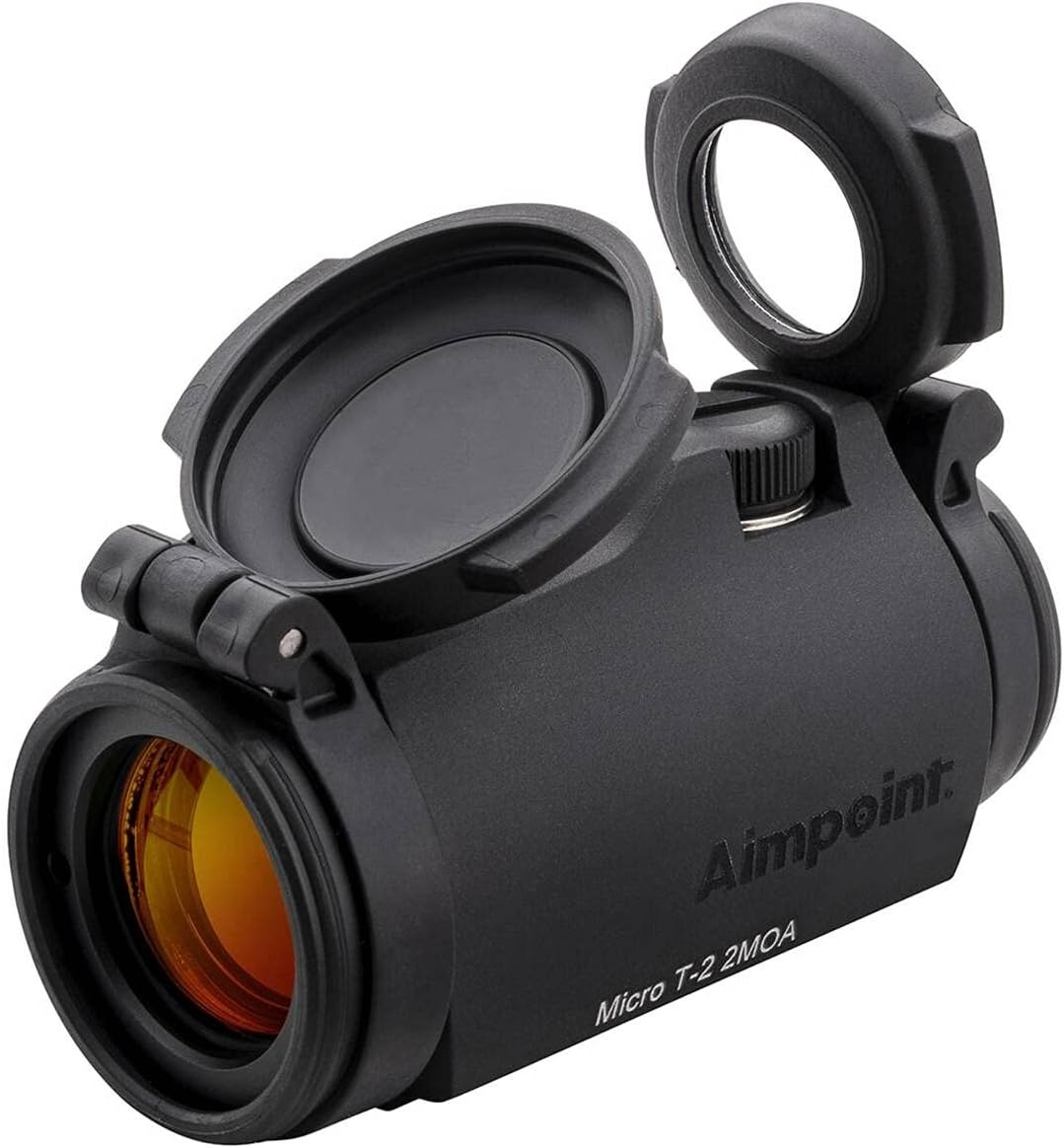
The Aimpoint Micro T-2 is one of the most refined compact red dots ever produced. It’s a premium micro-tube optic designed for military durability and exceptional battery life while remaining small enough to keep rifle weight down.
Key Specs
- Dot size: 2 MOA
- Battery: CR2032
- Battery life: up to 50,000 hours
- Mount pattern: Aimpoint Micro footprint
- Night vision settings: Yes
- Weight: ~3 oz (without mount)
Pros
- Outstanding durability
- Extremely long battery life
- Minimal parallax shift
- Clear glass with neutral tint
Cons
- Premium price
- Small window compared to larger optics
My hands-on notes
This optic excels in co-witness setups because of its mount compatibility. With a standard micro lower-1/3 mount, the irons sit cleanly at the bottom of the window without obstructing the dot. Absolute mounts also work perfectly if you prefer traditional alignment.
The emitter is well protected inside the tube, reducing occlusion issues during rain or dust exposure. Parallax shift is extremely minimal even near the edge of the window.
Buttons remain tactile even when wearing gloves, which matters in cold environments.
What people say online
Across AR-15 forums and Reddit, shooters consistently describe the T-2 as the “gold standard” micro optic. The most common praise involves battery life and reliability under heavy recoil or rough duty conditions.
Mounting clarity
Compatible with the Aimpoint Micro footprint, which means dozens of mounts exist for absolute and lower-1/3 configurations.
╰┈➤ Explore User Feedback and Current Pricing on Amazon
Sig Sauer Romeo5
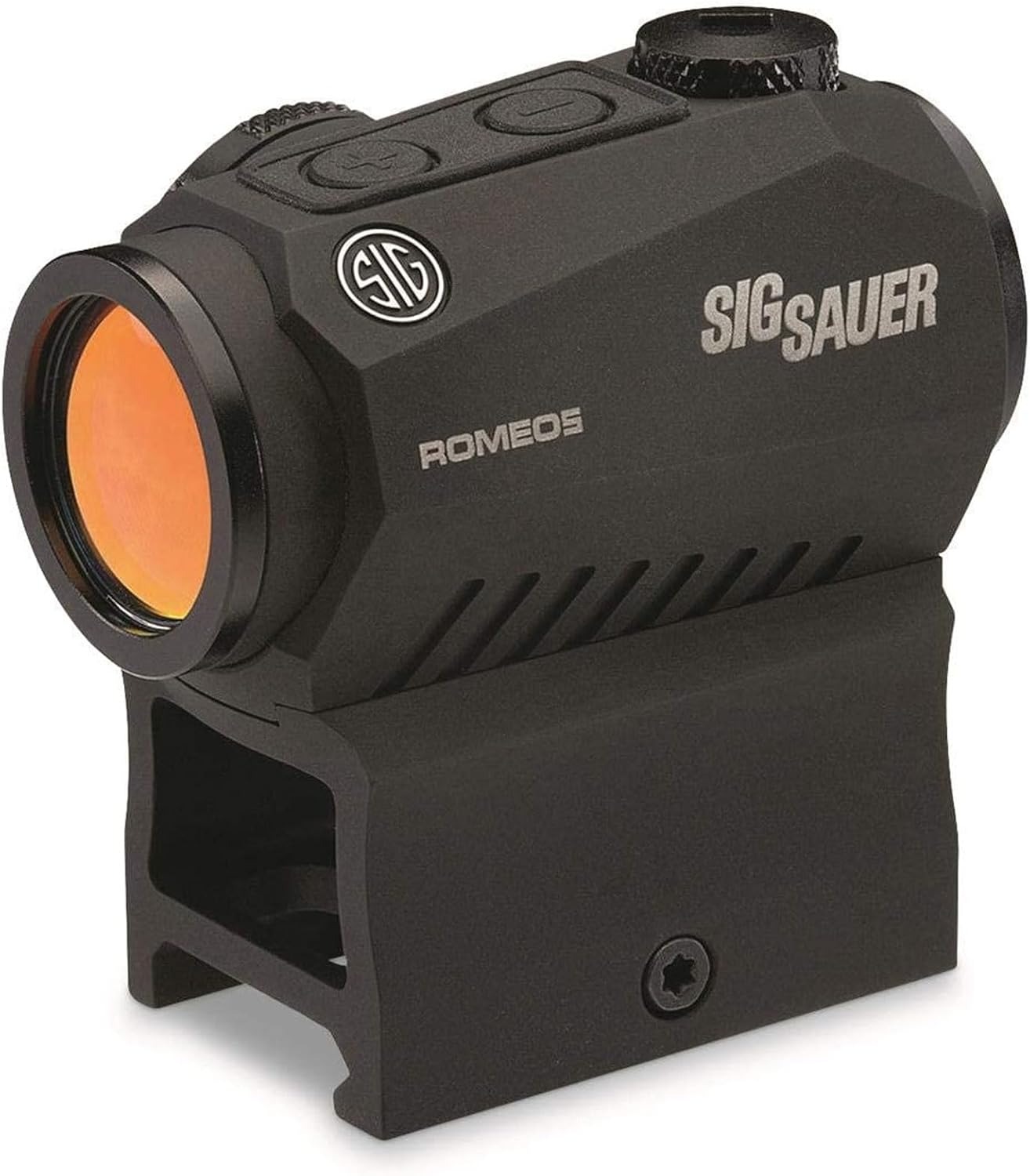
The Sig Sauer Romeo5 is one of the most widely recommended budget red dots for AR-15 rifles. It provides surprisingly good performance while maintaining compatibility with standard co-witness mounting heights.
Key Specs
- Dot size: 2 MOA
- Battery: CR2032
- Battery life: ~40,000 hours
- Motion activation: Yes
- Mount: Picatinny
Pros
- Excellent price-to-performance
- Motion-activated illumination
- Lightweight design
- Comes with multiple mounts
Cons
- Slight blue lens tint
- Not duty-grade durability
My hands-on notes
One feature I appreciate is the included mount options. The Romeo5 ships with both low and riser mounts, allowing users to choose absolute or lower-1/3 alignment immediately.
The emitter sits slightly recessed which helps prevent obstruction from debris.
Parallax control is respectable for a budget optic, though you’ll notice minor shift when pushing to the extreme edges of the lens.
Buttons are rubberized and easy to feel, even while wearing gloves.
What people say online
Many shooters recommend the Romeo5 as the best entry-level AR optic. Discussions frequently highlight its reliability and auto-on feature, which preserves battery life.
Mounting clarity
The included riser mount aligns very well for lower-1/3 co-witness with standard AR iron sights.
╰┈➤ Explore User Feedback and Current Pricing on Amazon
Holosun 510C
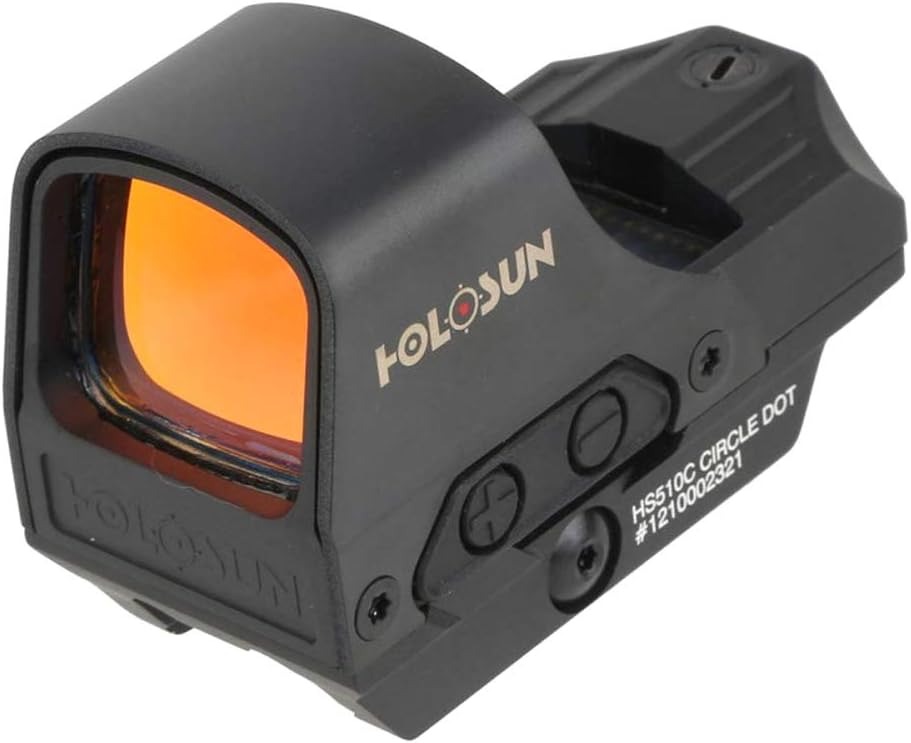
The Holosun 510C is known for its massive viewing window and versatile reticle system. It’s particularly popular on competition carbines and defensive rifles where situational awareness matters.
Key Specs
- Reticle: 2 MOA dot / 65 MOA circle
- Battery: CR2032
- Solar backup: Yes
- Window: Large open reflex
- Mount: Picatinny
Pros
- Huge field of view
- Multiple reticle options
- Solar failsafe backup
- Fast target acquisition
Cons
- Open emitter design
- Bulkier than micro optics
My hands-on notes
The 510C offers excellent visibility when running irons. The large window allows the front sight post to remain visible without cluttering the reticle.
The open emitter can be partially occluded by mud or rain, but the housing provides reasonable protection.
Lens coatings introduce a slight green tint but maintain good clarity.
Recoil handling is solid, especially on 5.56 carbines and PCC platforms.
What people say online
Shooters frequently mention how easy the 510C is to shoot fast with. The circle-dot reticle helps guide the eye to the center, making transitions extremely quick.
Mounting clarity
The integrated mount provides a lower-1/3 co-witness height on most AR platforms.
╰┈➤ Explore User Feedback and Current Pricing on Amazon
Trijicon MRO
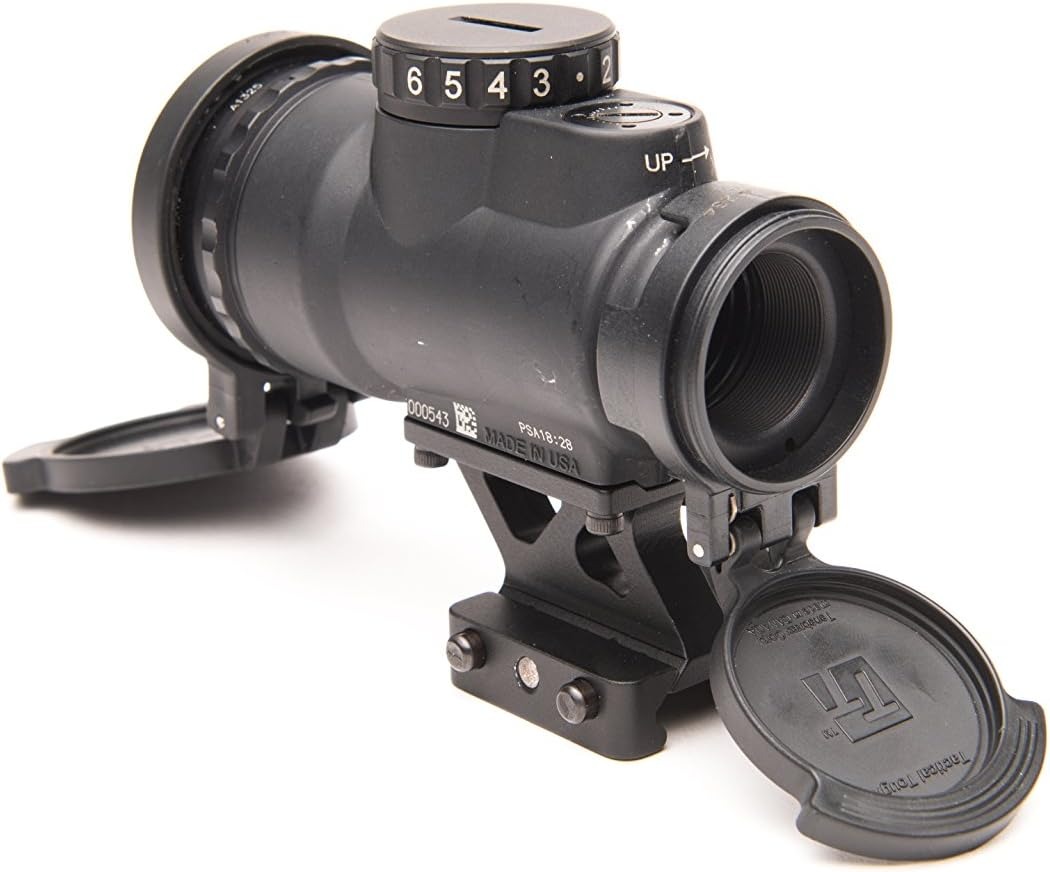
The Trijicon MRO is designed for durability and speed. Its large objective lens creates a wide field of view while maintaining a compact form factor.
Key Specs
- Dot size: 2 MOA
- Battery: CR2032
- Battery life: ~5 years
- Adjustment: Top-mounted brightness dial
Pros
- Extremely rugged housing
- Large objective lens
- Long battery life
- Simple brightness control
Cons
- Slight magnification effect
- Requires proprietary mounts
My hands-on notes
The MRO’s large front lens improves situational awareness and makes the optic feel almost holographic in speed.
The brightness dial is easy to manipulate with gloves and includes night-vision settings.
Parallax control is generally good but becomes noticeable near the edges.
Glass has a slight warm tint but remains very usable.
What people say online
Users often praise the durability and simplicity. Many patrol officers prefer it for rifles that must stay powered on for extended periods.
Mounting clarity
Most MRO mounts are available in both absolute and lower-1/3 heights, making iron sight alignment easy.
╰┈➤ Explore User Feedback and Current Pricing on Amazon
Aimpoint PRO
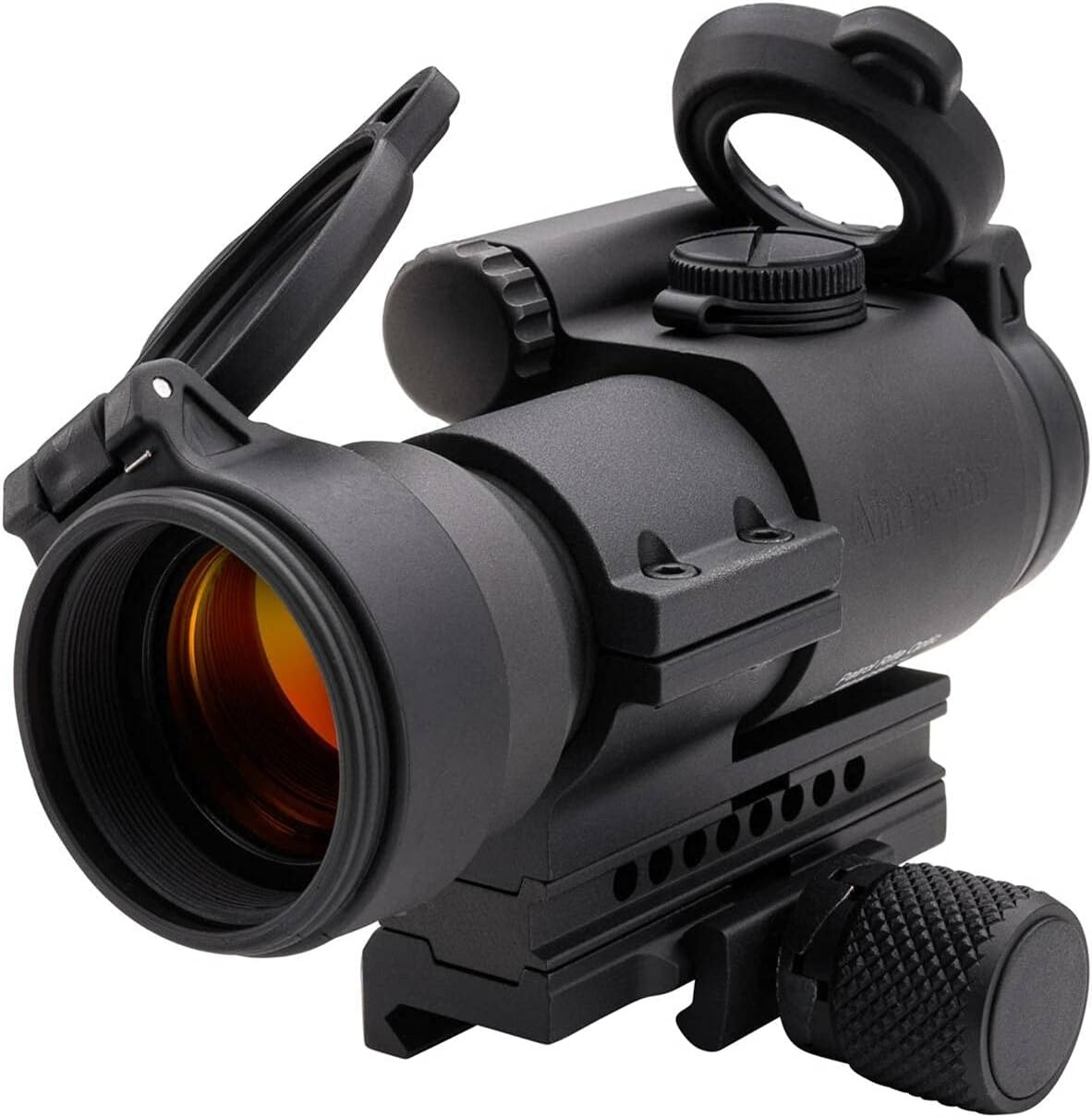
The Aimpoint PRO is one of the most battle-proven red dots available for AR-style rifles. Law enforcement agencies across the world rely on it for duty rifles.
Key Specs
- Dot size: 2 MOA
- Battery: DL1/3N
- Battery life: ~30,000 hours
- Mount: QRP2 mount included
Pros
- Extremely rugged
- Proven duty optic
- Clear glass
- Reliable brightness dial
Cons
- Larger and heavier
- Older battery type
My hands-on notes
The PRO uses a traditional 30mm tube which provides a comfortable viewing window.
The included mount aligns perfectly for absolute co-witness, meaning the iron sights sit directly in the center of the optic window.
Lens coatings reduce glare while maintaining strong light transmission.
The brightness knob is large and easy to rotate even with gloves.
What people say online
Shooters consistently mention reliability. The optic has a reputation for surviving abuse that would destroy many cheaper alternatives.
Mounting clarity
The factory mount is optimized for absolute co-witness with standard AR iron sights.
╰┈➤ Explore User Feedback and Current Pricing on Amazon
Primary Arms SLX MD-25
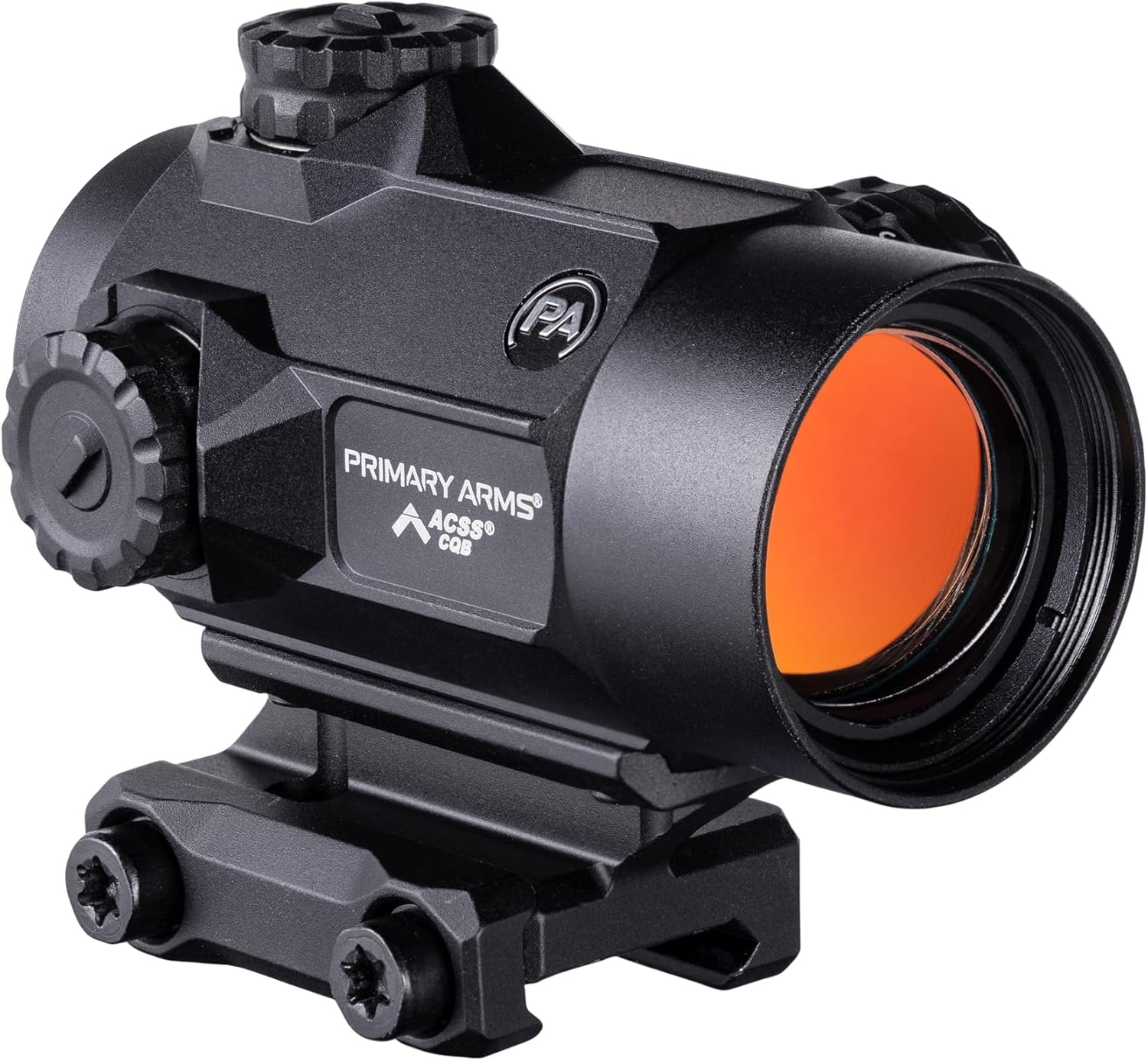
The Primary Arms SLX MD-25 offers a larger tube diameter than typical micro dots while maintaining an affordable price point.
Key Specs
- Dot size: 2 MOA
- Battery: CR2032
- Tube diameter: 25mm
- Mount: Micro footprint compatible
Pros
- Larger viewing window
- Affordable
- Good battery life
- Compatible with micro mounts
Cons
- Slight lens tint
- Not as rugged as premium optics
My hands-on notes
The 25mm tube increases peripheral visibility compared to traditional micro dots.
Controls are tactile and easy to operate with gloves.
Parallax shift is minimal in the center but slightly noticeable near edges.
The emitter is partially recessed, reducing obstruction risk.
What people say online
Many shooters view the MD-25 as an excellent middle ground between compact micro dots and larger tube optics.
Mounting clarity
Because it uses the Aimpoint Micro mount pattern, you can choose nearly any riser height for iron sight alignment.
╰┈➤ Explore User Feedback and Current Pricing on Amazon
How I Tested These Optics
Parallax
I evaluated parallax by placing the dot on a fixed target and shifting my head position across the viewing window. Optics with minimal point-of-impact shift performed best.
Co-Witness Alignment
Each optic was mounted on an AR-15 equipped with flip-up iron sights. I tested both absolute and lower-1/3 mount heights to see how well the irons aligned with the dot.
Durability
Durability testing included repeated firing sessions and simulated impacts from basic field use.
Battery Performance
Battery life claims were compared against real-world brightness settings commonly used outdoors.
Brightness Range
Each optic was tested in both bright daylight and low-light environments to confirm the usability of brightness settings.
Glass Quality
I evaluated tint, distortion near the edges, and overall clarity while tracking moving targets.
Controls Ergonomics
Buttons and brightness dials were tested with gloves to evaluate tactile feedback.
Mounting Ecosystem
Optics with standardized footprints scored higher due to the availability of aftermarket mounts.
How to Choose the Right Red Dot for This Gun
Choosing the right optic for a rifle with iron sights requires understanding how the optic integrates with your existing sight system.
First, determine whether you prefer absolute co-witness or lower-1/3 co-witness. Absolute alignment places the red dot directly on top of the front sight post. Lower-1/3 setups place the irons slightly below the optic’s centerline.
Lower-1/3 is generally preferred today because it keeps the iron sights out of the main sight picture while still allowing quick access if the optic fails.
Next, evaluate mount height compatibility. Many red dots ship with mounts optimized for AR rifles, but some require aftermarket risers.
Optics using the Aimpoint Micro footprint offer the most flexibility because dozens of mount manufacturers produce compatible options.
Another important factor is window size. Larger windows make it easier to track targets while still seeing iron sights.
However, open reflex optics can expose the emitter to debris, which may block the projected dot.
Closed-tube optics protect the emitter but slightly restrict peripheral vision.
Battery reliability is also critical. Some shooters prefer optics with motion activation to conserve battery life.
Finally, consider the intended role of the rifle. Duty or defensive rifles benefit from rugged optics with proven durability, while recreational carbines may prioritize affordability and large viewing windows.
Frequently Asked Questions
What is co-witness on a rifle optic?
Co-witness refers to the alignment between a red dot sight and iron sights so that both appear in the same sight picture.
What is the difference between absolute and lower-1/3 co-witness?
Absolute places the iron sights directly in the center of the optic window. Lower-1/3 positions the irons slightly below the dot.
Do all red dots support co-witness?
Not all do. The optic’s mount height must match the rifle’s sight height for proper alignment.
Are iron sights still necessary with a red dot?
Many shooters still run backup irons as a redundancy in case the optic fails.
Is a larger optic window better for co-witness?
Larger windows can make iron sights easier to see, but they also increase optic size and weight.
Conclusion
Choosing the Best Red Dot for Co-Witness ultimately comes down to balancing durability, mount compatibility, and sight picture clarity. The optics in this guide represent some of the most reliable choices across different price points, from entry-level options like the Romeo5 to duty-grade systems such as the Aimpoint Micro T-2 and Aimpoint PRO.
When properly mounted and zeroed, a good red dot paired with iron sights provides one of the most reliable and versatile aiming systems available for modern rifles.