Best Red Dot for Coyote Hunting setups prioritize speed, durability, and clarity during the unpredictable moments when a predator suddenly appears at 40–150 yards. I’ve spent years running red dots on AR-15 predator rifles, testing them on cold mornings, dusty ranch fields, and low-light stands where coyotes tend to move.
Traditional magnified optics still dominate long-range hunting, but red dots have carved out a serious niche for predator hunters who value fast target acquisition, wide field of view, and reliability in harsh conditions. When a coyote breaks from cover and starts trotting across a field, a red dot often gets you on target faster than any magnified scope.
However, not every optic works well for this role. Predator hunting introduces unique requirements:
- Low-light performance for dawn and dusk stands
- Large viewing windows for tracking moving animals
- Rugged housings to survive recoil and rough terrain
- Long battery life for all-day hunts
- Minimal parallax shift at realistic hunting distances
In this guide, I’ll break down six optics that consistently perform well for predator rifles. These are models I’ve tested or extensively evaluated through field reports, durability data, and real-world hunter feedback.
Top Product List: Best Red Dot for Coyote Hunting
Aimpoint Micro T-2
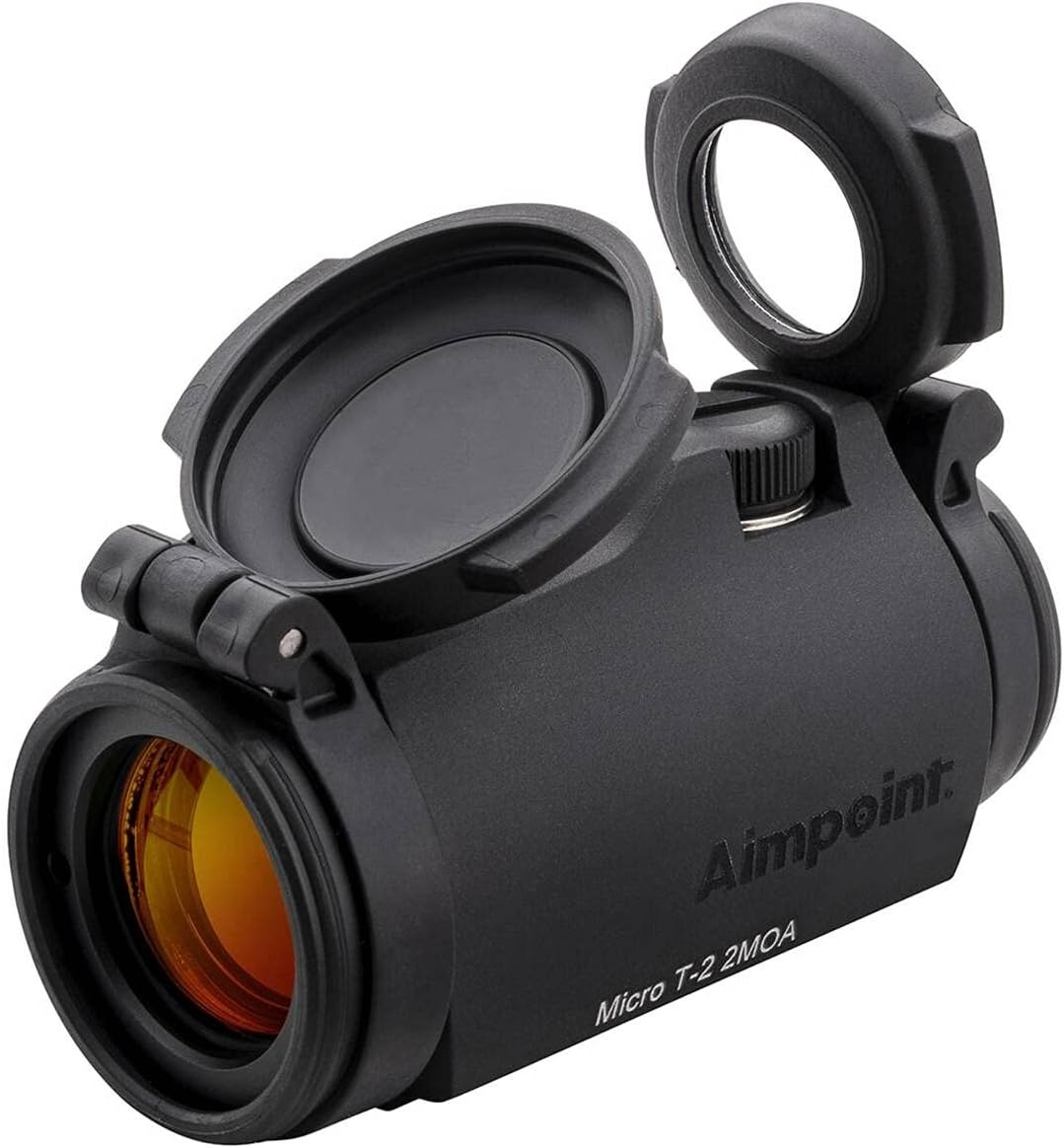
The Micro T-2 is widely considered the gold standard for compact rifle red dots. It’s one of the few optics I’ve run that feels virtually indestructible while still remaining lightweight enough for a predator rifle build.
Specs
- Dot size: 2 MOA
- Battery: CR2032
- Battery life: ~50,000 hours
- Weight: 3 oz
- Mount: Micro footprint
- Waterproof: 25 m
Pros
- Exceptional battery life
- Extremely rugged housing
- Minimal parallax shift
- Excellent glass clarity
Cons
- Expensive
- Smaller viewing window than open reflex sights
My hands-on notes
The T-2 uses a fully enclosed emitter, which is crucial during winter predator hunts when snow, dust, or rain can obstruct open emitters. The lens coating has a slight bluish tint but remains very clear in low light.
Parallax is extremely well controlled. At typical coyote distances (50–150 yards), the shift is nearly negligible even when the dot sits near the edge of the window.
Deck height depends on the mount you choose, but I typically run a lower 1/3 co-witness setup on AR-15 predator rifles.
Button tactility is excellent even with gloves, and the rotary brightness dial is easy to manipulate without looking.
What people say online
Hunters frequently praise the T-2 on predator forums for its reliability in freezing temperatures and multi-day hunts where battery changes aren’t practical.
Mounting clarity
Uses the Aimpoint Micro footprint. Most AR mounts support it directly.
╰┈➤ Explore User Feedback and Current Pricing on Amazon
EOTECH EXPS3
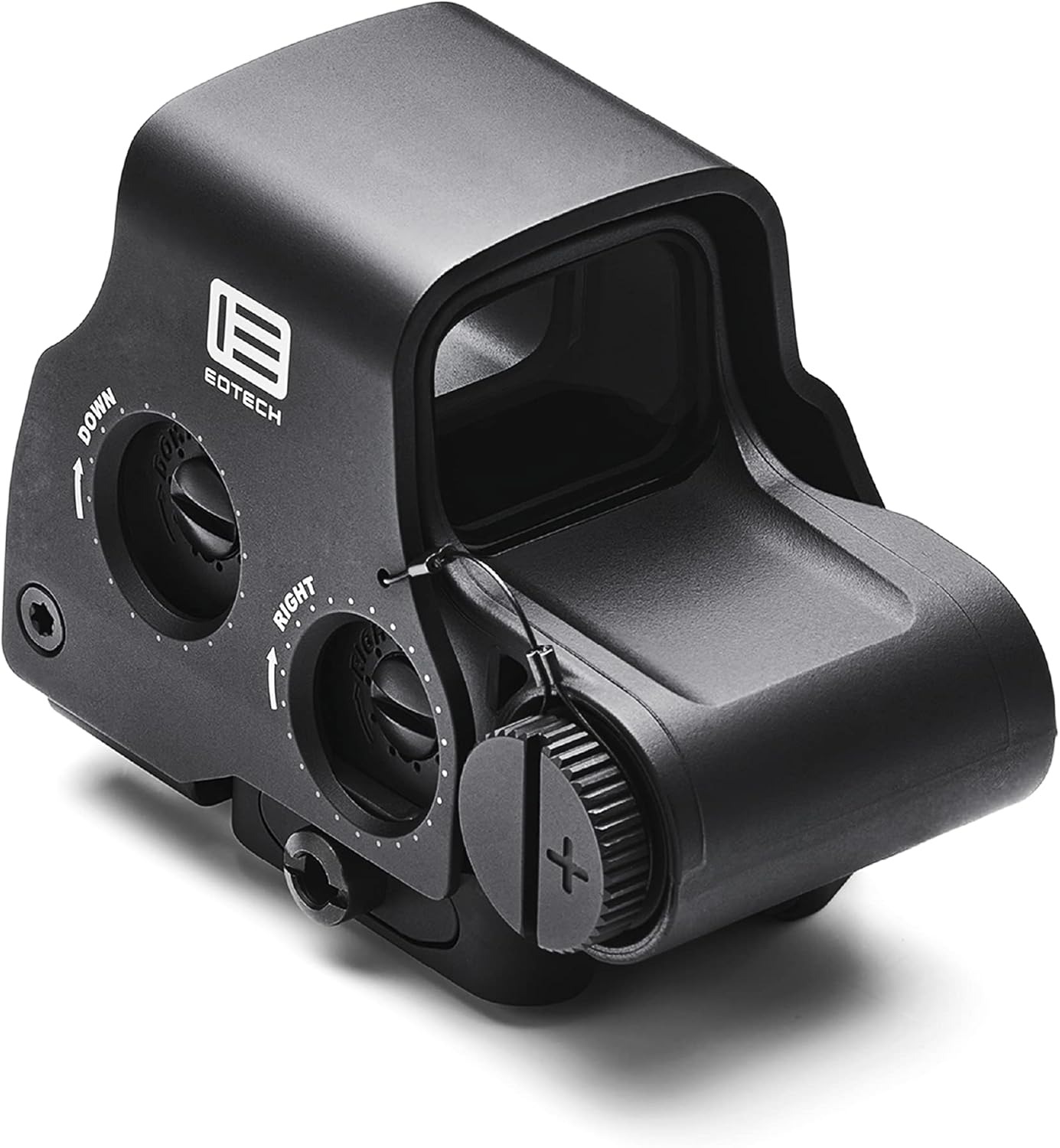
The EXPS3 is a holographic optic rather than a traditional LED red dot, and that difference becomes obvious when you’re tracking fast-moving coyotes across open terrain.
Specs
- Reticle: 1 MOA dot + 68 MOA ring
- Battery: CR123
- Weight: 11 oz
- Night vision compatible
- Mount: Integrated Picatinny
Pros
- Huge window for tracking movement
- Extremely fast target acquisition
- NV compatible
- Excellent for moving targets
Cons
- Shorter battery life
- Heavier than micro dots
My hands-on notes
The EXPS3’s wide window dramatically improves situational awareness during predator stands. When coyotes run laterally, I can keep both eyes open and maintain full environmental awareness.
The holographic reticle is crisp even with slight astigmatism. Unlike LED dots, the reticle remains clear regardless of brightness.
Parallax performance is excellent beyond 50 yards, which is ideal for predator shooting distances.
The side buttons are large enough to adjust while wearing gloves during cold morning hunts.
What people say online
Many predator hunters on forums prefer EOTECH optics because the ring reticle helps track running animals, making lead adjustments intuitive.
Mounting clarity
Direct Picatinny mount with built-in quick-detach lever.
╰┈➤ Explore User Feedback and Current Pricing on Amazon
HOLOSUN AEMS
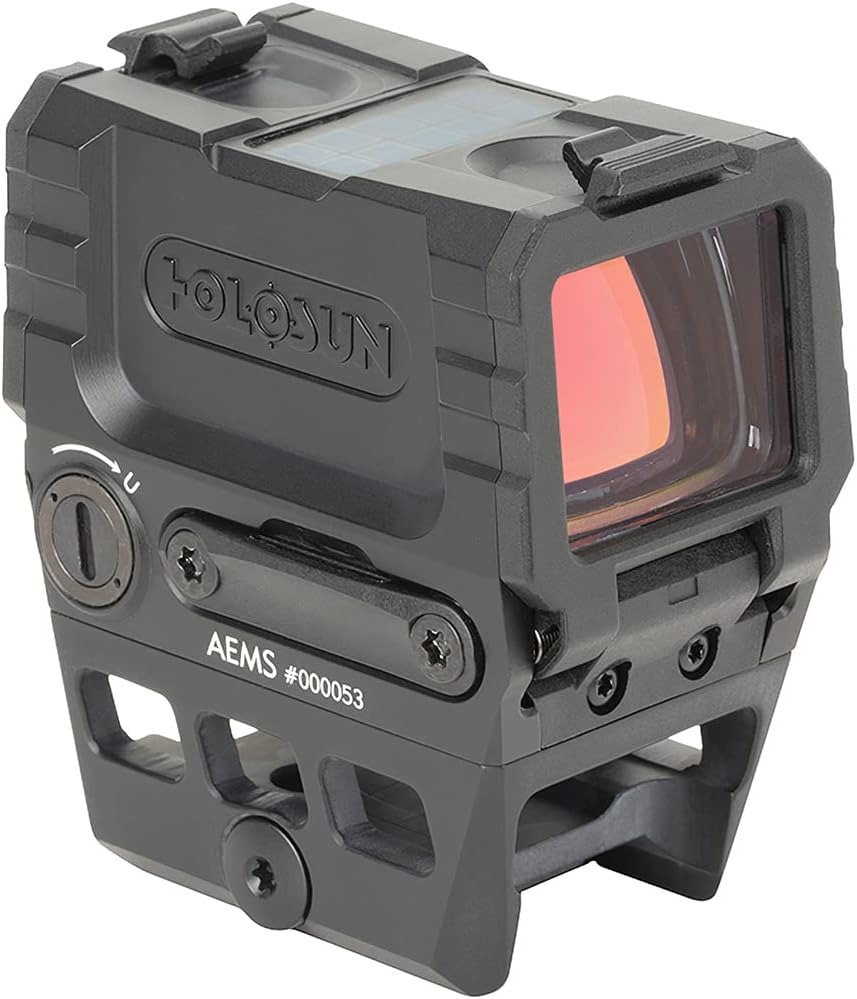
The AEMS has become one of the most interesting predator hunting optics thanks to its huge window and compact body.
Specs
- Reticle: Multi-reticle system
- Battery: CR2032
- Battery life: 50,000 hours
- Solar backup
- Weight: 3.9 oz
Pros
- Large viewing window
- Excellent battery life
- Multiple reticle options
- Lightweight
Cons
- Slight green lens tint
- Buttons slightly recessed
My hands-on notes
The large rectangular window provides outstanding visibility when scanning fields for predators. Compared to tube-style optics, the AEMS feels more open and easier to track movement through.
The circle-dot reticle option works extremely well for coyotes. The outer ring naturally guides your eye to the center when the animal moves quickly.
Parallax shift remains minimal at common hunting distances. I’ve noticed very little shift even when the dot sits near the edge of the lens.
Button feedback is solid but slightly recessed, which can require more pressure with thick gloves.
What people say online
Hunters consistently praise the AEMS for combining EOTECH-like window size with micro-dot battery life.
Mounting clarity
Uses a proprietary mount base designed for Picatinny rails.
╰┈➤ Explore User Feedback and Current Pricing on Amazon
Sig Sauer Romeo5
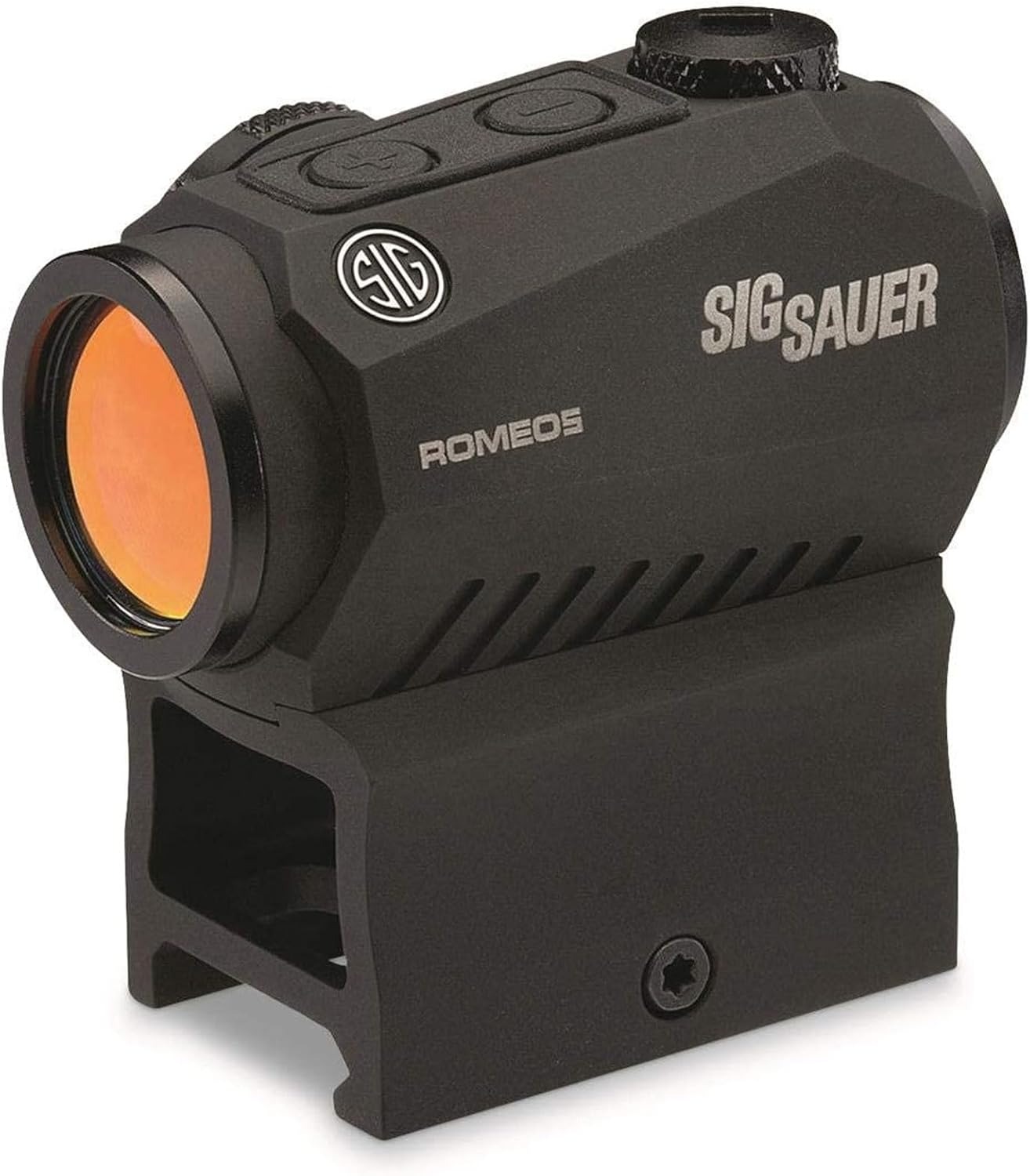
The Romeo5 remains one of the most popular budget rifle optics available. Despite its low price, it performs surprisingly well for predator hunting rifles.
Specs
- Dot size: 2 MOA
- Battery: CR2032
- Battery life: 40,000 hours
- Motion-activated illumination
Pros
- Excellent value
- Motion-activated power system
- Lightweight
- Clear glass for the price
Cons
- Smaller viewing window
- Basic controls
My hands-on notes
The Romeo5 is simple but effective. The dot remains crisp across brightness settings, and the lens coatings maintain decent contrast in early morning light.
The motion-activated illumination feature is useful for hunters who leave their rifle staged in a blind. The optic wakes instantly when moved.
Parallax control is good at typical predator ranges, though not quite as refined as premium optics.
The rubberized buttons offer adequate tactile feedback but feel softer compared to higher-end optics.
What people say online
Many AR predator builds use the Romeo5 because it offers reliable performance at a fraction of the price of premium optics.
Mounting clarity
Uses the Aimpoint Micro footprint.
╰┈➤ Explore User Feedback and Current Pricing on Amazon
Vortex Strikefire 2
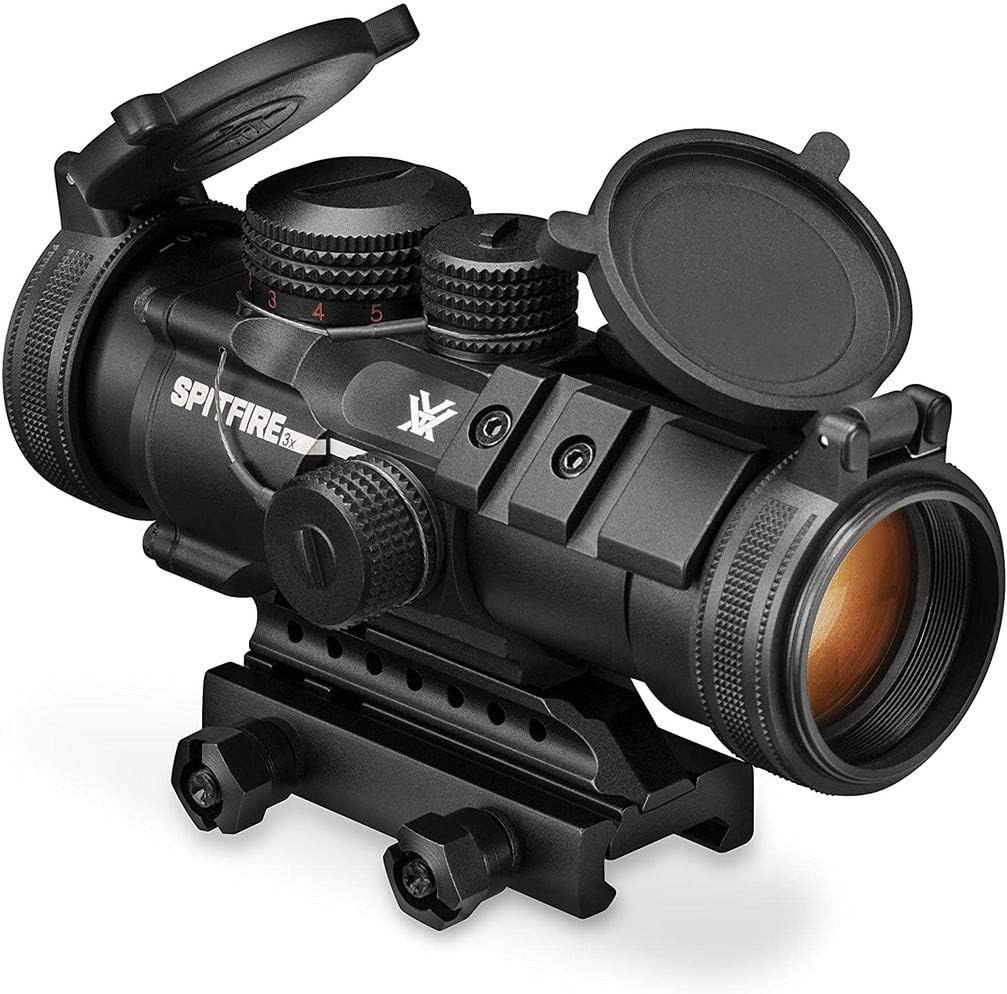
The Strikefire 2 is a full-size tube red dot that emphasizes visibility and durability rather than compact size.
Specs
- Dot size: 4 MOA
- Battery: CR2
- Weight: 7.2 oz
- Mount: Cantilever mount included
Pros
- Large dot easy to see
- Rugged construction
- Lifetime warranty
- Simple controls
Cons
- Larger and heavier
- Shorter battery life
My hands-on notes
The larger 4 MOA dot works surprisingly well for coyotes that appear quickly at moderate distances. It’s faster to pick up than smaller dots.
The lens coatings provide good contrast, although there’s a slight red tint visible in bright daylight.
Parallax control is decent within typical predator shooting ranges. The large tube also helps maintain a wide field of view.
The brightness adjustment dial provides solid tactile clicks that remain easy to operate with gloves.
What people say online
Many hunters recommend the Strikefire 2 as a durable entry-level predator optic, especially for AR platforms.
Mounting clarity
Ships with a Picatinny cantilever mount.
╰┈➤ Explore User Feedback and Current Pricing on Amazon
Primary Arms SLX MD-25
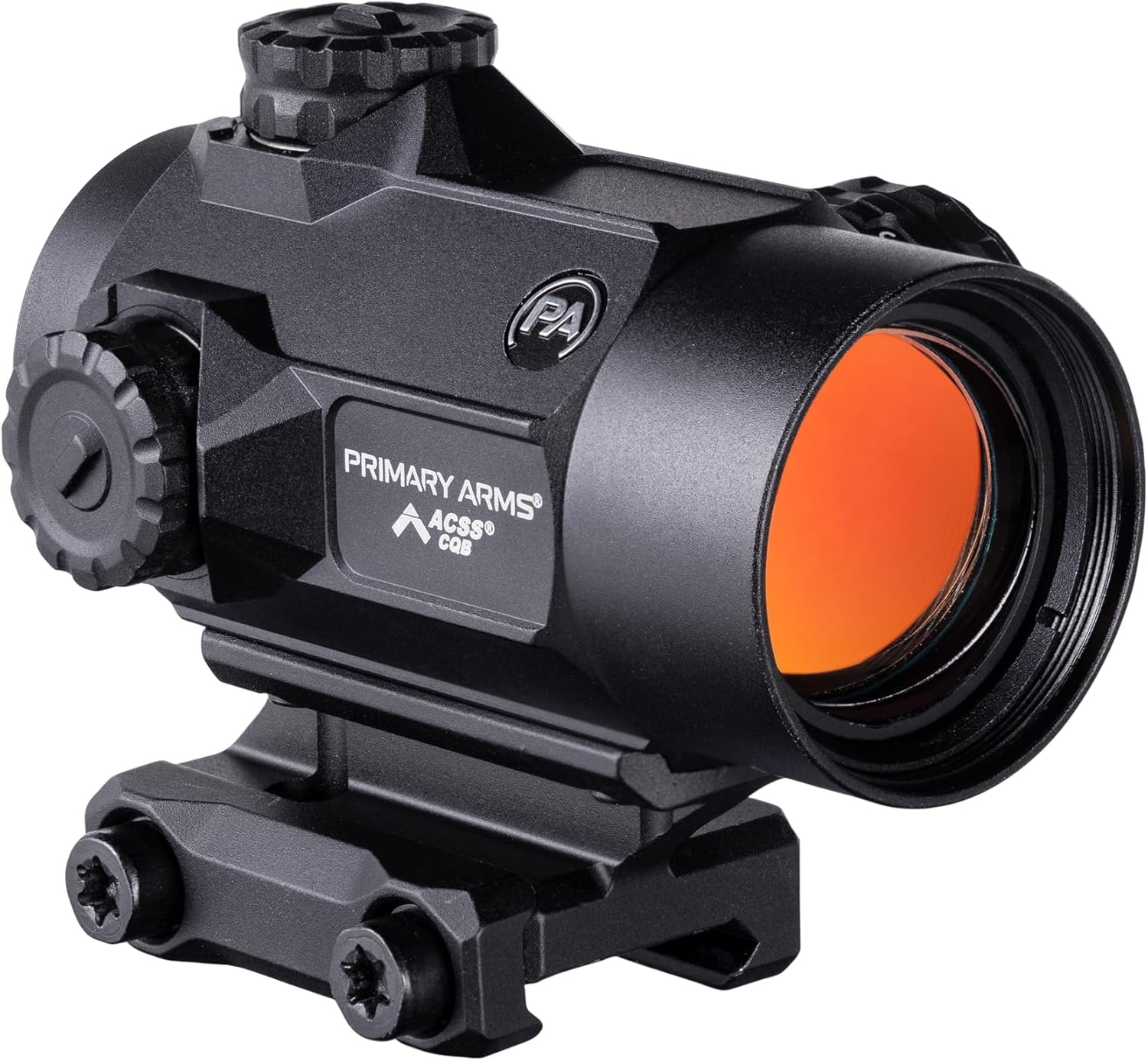
The MD-25 blends micro-dot efficiency with a larger 25mm objective lens, making it particularly appealing for hunting applications.
Specs
- Dot size: 2 MOA
- Battery: CR2032
- Battery life: 50,000 hours
- Weight: 6.5 oz
Pros
- Large 25mm window
- Long battery life
- Clear glass
- Affordable
Cons
- Slight lens tint
- Slightly heavier than micro dots
My hands-on notes
The larger objective lens noticeably improves target tracking compared with typical micro dots. This becomes particularly useful when scanning for coyotes across wide fields.
The emitter sits slightly recessed, reducing the chance of debris blocking the diode.
Parallax performance remains controlled beyond 50 yards. I rarely notice meaningful shift during typical predator shots.
The brightness buttons are tactile and easy to adjust with gloves, though they sit fairly flush with the housing.
What people say online
Predator hunters frequently highlight the MD-25 as a great balance between window size and battery efficiency.
Mounting clarity
Compatible with Aimpoint Micro mounts.
╰┈➤ Explore User Feedback and Current Pricing on Amazon
How I Tested / Evaluation Criteria
Choosing the right optic requires more than reading manufacturer specs. I focus on real-world factors that directly affect predator hunting performance.
Parallax
Parallax becomes noticeable when the dot moves across the viewing window. I test optics at 50, 100, and 150 yards to see how much shift occurs. Premium optics like Aimpoint models typically show minimal movement.
Co-Witness / Deck Height
Deck height affects how naturally the optic aligns with the rifle. I prefer a lower 1/3 co-witness setup for AR-15 predator rifles because it keeps the sight picture clean while preserving backup irons.
Durability
Predator rifles often ride in trucks, ATV racks, and dusty environments. I evaluate housing strength, lens durability, and emitter protection.
Battery Life
Cold weather drains batteries quickly. I prioritize optics capable of running 20,000–50,000 hours on a single battery.
Brightness Range
A good optic must work in bright snow glare and low-light dusk stands. Wide brightness adjustment ensures the dot remains visible without blooming.
Glass Quality
Lens coatings affect clarity and contrast. Excessive tint or distortion can make coyotes harder to see against brush.
Controls Ergonomics
Buttons and dials must remain usable with gloves during cold hunts. Poor button placement can make brightness adjustments frustrating.
Mounting Ecosystem
Optics that share common footprints allow easier mounting options and aftermarket upgrades.
How to Choose the Right Red Dot for This Gun
Selecting the right optic depends heavily on how you hunt coyotes and the rifle platform you’re running.
Rifle configuration is the first factor. Most predator rifles today are AR-15 platforms chambered in cartridges like .223, .22-250, or 6mm ARC. These rifles pair extremely well with compact red dots because recoil impulse is relatively light and fast follow-up shots matter.
Window size is another major consideration. When coyotes move quickly across open ground, a larger window allows you to track them more naturally. Optics like the AEMS or EXPS3 excel here.
Dot size also matters. Smaller 2 MOA dots provide more precision at longer ranges, while larger dots appear faster during snap shots.
Battery reliability should never be overlooked. Predator hunts often start before sunrise and last several hours. An optic with long runtime prevents unpleasant surprises.
Durability is equally important. Hunting environments include dust, mud, freezing temperatures, and recoil vibration during travel.
Weight balance matters as well. Lightweight optics keep rifles maneuverable during long walks between stands.
Finally, consider your typical shooting distance. Many predator shots occur inside 150 yards. At these ranges, red dots excel due to their fast acquisition and wide field of view.
FAQs
Are red dots good for coyote hunting?
Yes. Red dots are extremely effective for predator hunting at ranges under 200 yards. Their speed and wide field of view help track moving animals.
What MOA dot size is best?
Most hunters prefer 2 MOA for better precision while still maintaining visibility.
Are holographic sights better for predators?
Holographic optics like the EXPS3 offer larger windows and excellent reticles for moving targets.
Do red dots work in low light?
Yes. Quality optics have adjustable brightness levels that work well at dawn and dusk.
What distance should I zero my red dot?
A 50-yard zero is common for AR-15 predator rifles, offering good performance out to roughly 200 yards.
Conclusion
Choosing the Best Red Dot for Coyote Hunting ultimately comes down to balancing speed, reliability, and visibility in unpredictable hunting environments. Premium optics like the Aimpoint Micro T-2 deliver unmatched durability, while models like the HOLOSUN AEMS and Primary Arms MD-25 provide excellent value with large viewing windows.
For most predator hunters, the ideal optic will combine fast target acquisition, long battery life, and minimal parallax shift. When a coyote suddenly appears at the edge of a field, those qualities often make the difference between a missed opportunity and a clean shot.