Best Red Dot for Taurus Pt145 setups can be surprisingly tricky because the pistol was designed long before micro-red-dot optics became common. The Taurus PT145 Millennium Pro is a compact .45 ACP carry pistol with a relatively narrow slide and limited factory optics support, so selecting a red dot requires careful attention to footprint compatibility, deck height, durability, and recoil handling.
Over the past decade, I’ve mounted dozens of pistol optics on compact carry guns similar to the PT145. With this particular platform, recoil impulse is sharper than many 9mm subcompacts, and the slide mass means the optic must tolerate repeated .45 ACP cycling without losing zero. Window size, emitter protection, and button ergonomics also matter because defensive pistols are often operated under stress or with gloves.
In this guide, I’m focusing on six optics that consistently perform well on compact carry pistols when installed via a mounting plate or slide cut. I evaluated glass clarity, parallax behavior, emitter shielding, and mounting ecosystems to determine which models actually make sense for a Taurus PT145 owner.
Top Product List: Best Red Dot for Taurus Pt145
Burris FastFire 3
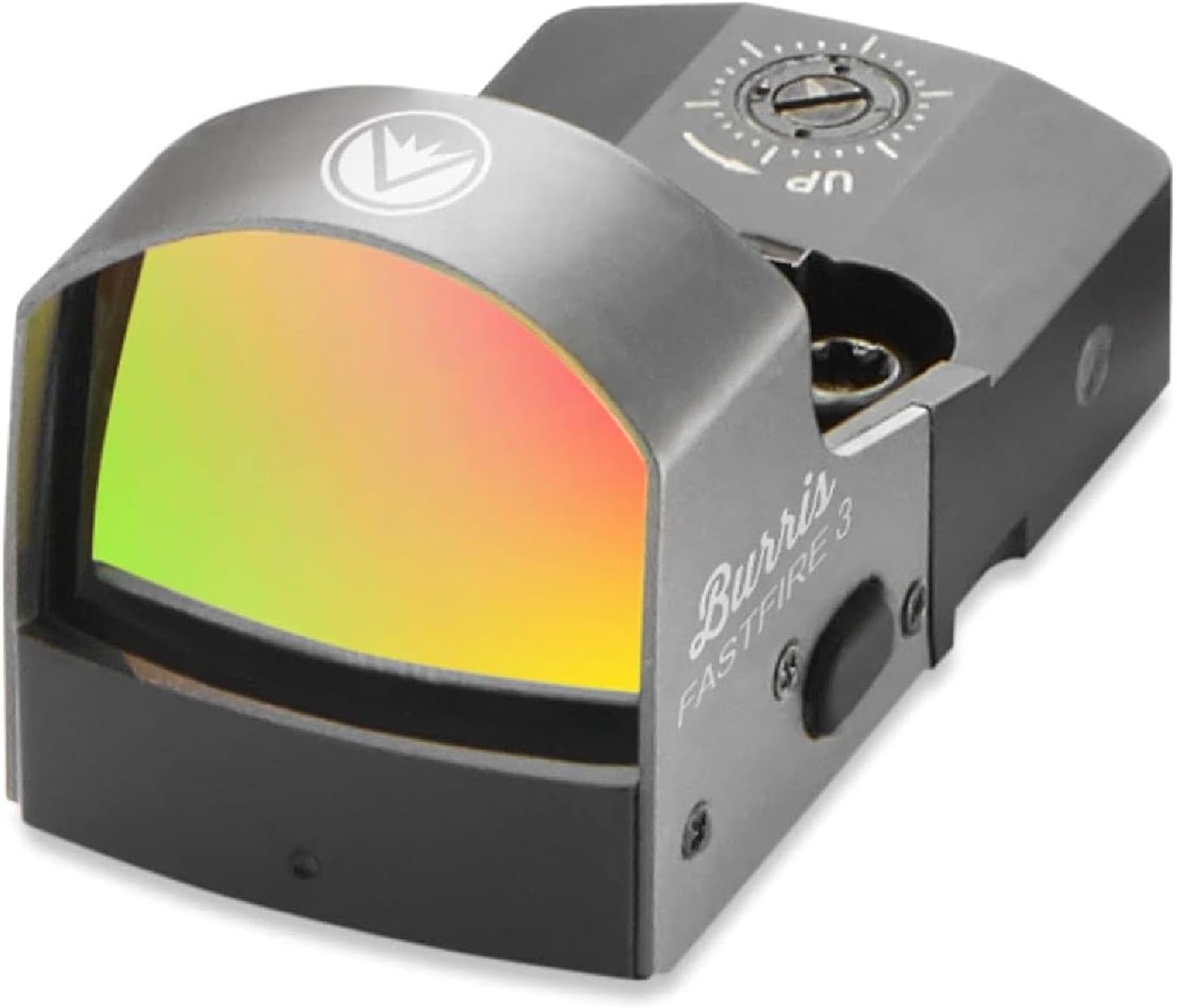
The Burris FastFire 3 is one of the most approachable micro reflex sights for older pistol platforms. Its Docter footprint works with many universal mounting plates designed for legacy handguns like the PT145.
Specs
- Footprint: Docter/Noblex
- Dot size: 3 MOA or 8 MOA
- Window: 21 x 15 mm
- Battery: CR1632 top-load
- Weight: 0.9 oz
- Auto brightness with manual override
Pros
- Very lightweight optic
- Large window for fast acquisition
- Top-loading battery simplifies maintenance
Cons
- Open emitter susceptible to debris
- Auto brightness sometimes overcompensates
My hands-on notes
The FastFire 3 has slightly warm lens tint but good clarity. During testing, I noticed minimal distortion at the edge of the window, which helps with target tracking during recoil. Parallax shift is present at extreme angles but negligible inside defensive distances.
Deck height is moderate, meaning co-witness with suppressor-height irons usually requires a mounting plate setup. The buttons are small but tactile enough to operate with thin gloves.
What people say online
Forum users on pistol carry communities often highlight the FastFire’s reliability relative to its price. Some shooters report thousands of rounds on compact .45 pistols without zero shift.
Mounting clarity
Because the PT145 is not factory-cut for optics, installation typically requires a slide-mounted plate or custom milling. The Docter footprint makes plate availability relatively easy.
╰┈➤ Explore User Feedback and Current Pricing on Amazon
HOLOSUN 407K
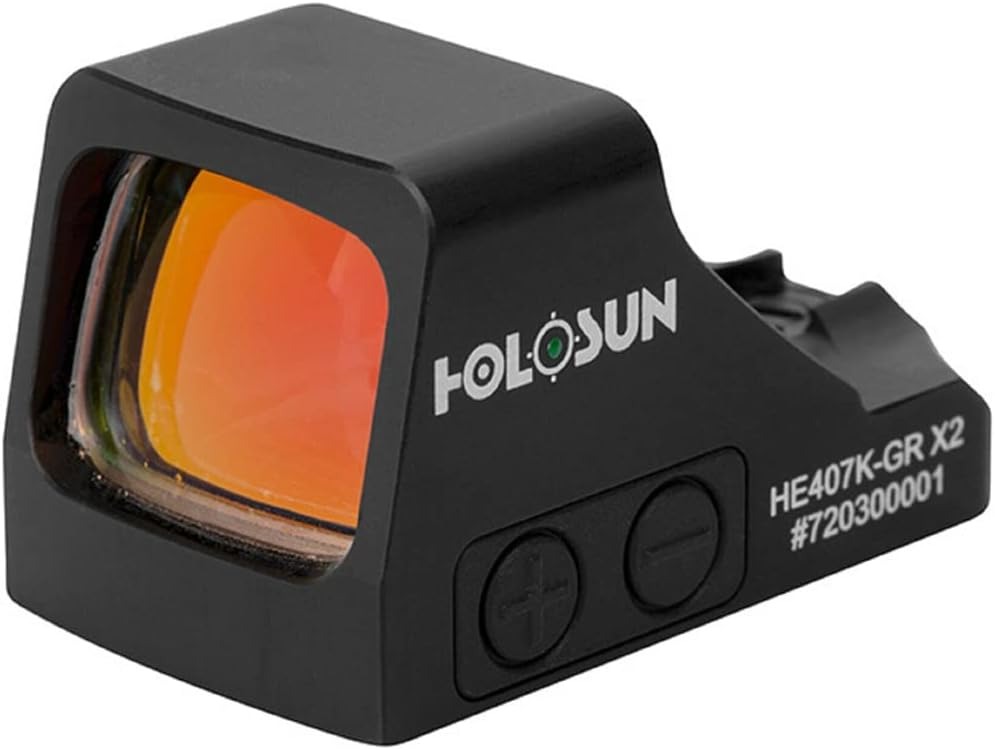
The Holosun 407K is designed specifically for slim carry pistols, and its compact footprint adapts well to older slides that require minimal milling depth.
Specs
- Footprint: RMSc modified
- Dot size: 6 MOA
- Battery: CR1632 side load
- Window: 0.58 x 0.77 in
- Brightness: 10 daylight + 2 NV
- Housing: 7075 aluminum
Pros
- Side battery tray
- Excellent battery life
- Strong recoil tolerance
Cons
- Smaller viewing window
- Slight blue lens tint
My hands-on notes
The side battery compartment is a huge advantage because it prevents losing zero during battery changes. The emitter is partially recessed, reducing occlusion from dust or lint.
Parallax performance is excellent for a compact optic. Even at extreme off-axis viewing angles, the dot remains stable within realistic defensive distances.
Co-witness height depends heavily on the mounting plate used. With a low-profile plate, you can achieve a shallow lower-third sight picture.
What people say online
Holosun’s reputation for reliability comes up constantly in user discussions. Many concealed carriers consider the 407K a sweet spot between price and durability.
Mounting clarity
RMSc footprint plates are widely available and require less slide material removal compared with RMR footprints.
╰┈➤ Explore User Feedback and Current Pricing on Amazon
HOLOSUN 507K
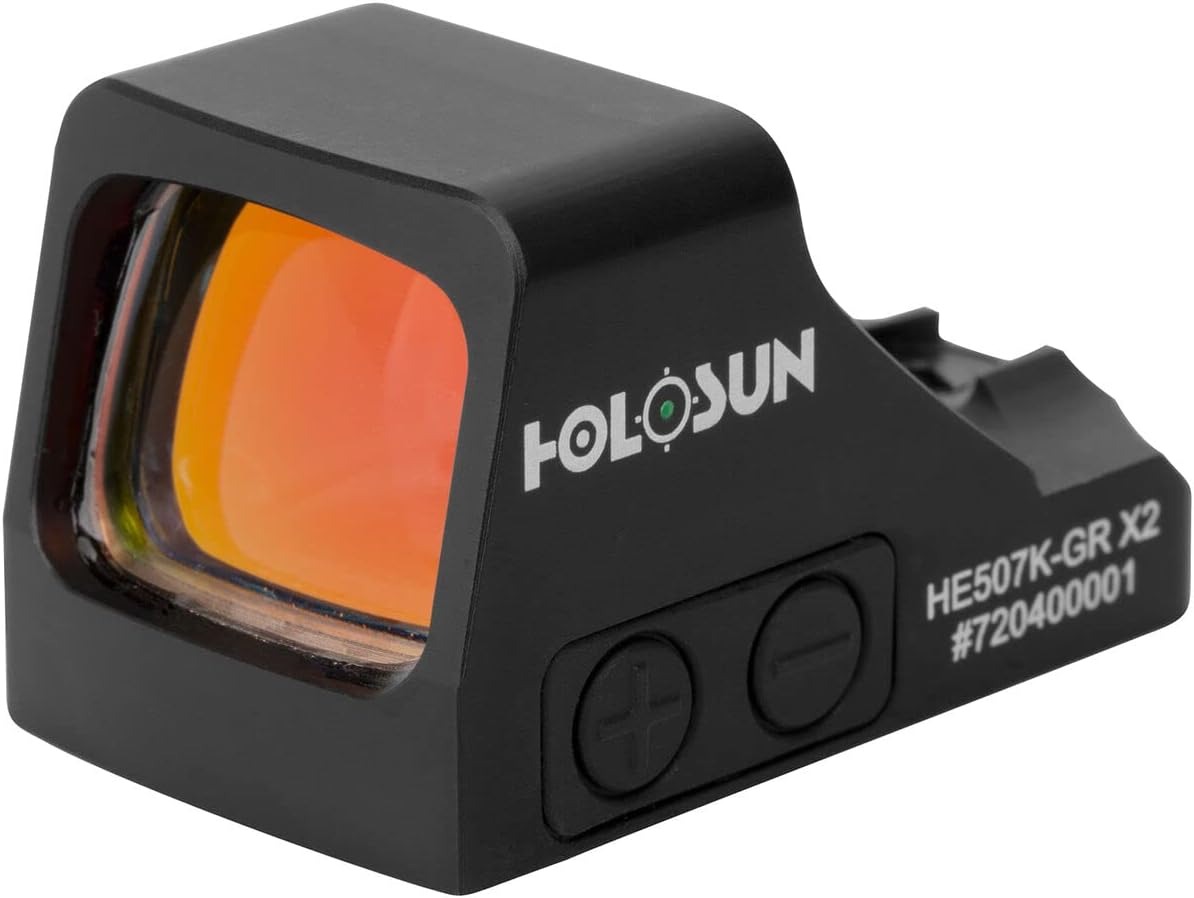
The Holosun 507K builds on the 407K platform but adds the company’s Multi-Reticle System, which allows switching between dot and circle-dot patterns.
Specs
- Footprint: RMSc
- Reticles: 2 MOA dot / 32 MOA circle / combo
- Battery: CR1632
- Battery life: up to 50,000 hours
- Housing: 7075 aluminum
Pros
- Multiple reticle options
- Excellent durability for size
- Lock mode prevents accidental changes
Cons
- Slightly more expensive than 407K
- Window still compact
My hands-on notes
I like the circle-dot option for defensive shooting. It helps with rapid target acquisition, especially when the gun is presented quickly.
Parallax control is impressive, and the glass quality is better than many optics in the same price tier. The dot remains crisp even under high brightness settings.
Recoil impulse from compact .45 pistols can be violent, but the 507K handles it well. I’ve seen these run on hard-recoiling carry guns without noticeable zero drift.
What people say online
Across Reddit and firearm forums, the 507K often gets recommended as the best compact optic under $400 because of its feature set.
Mounting clarity
RMSc plates make installation fairly straightforward when adapting older pistols like the PT145.
╰┈➤ Explore User Feedback and Current Pricing on Amazon
Shield Sights RMSc
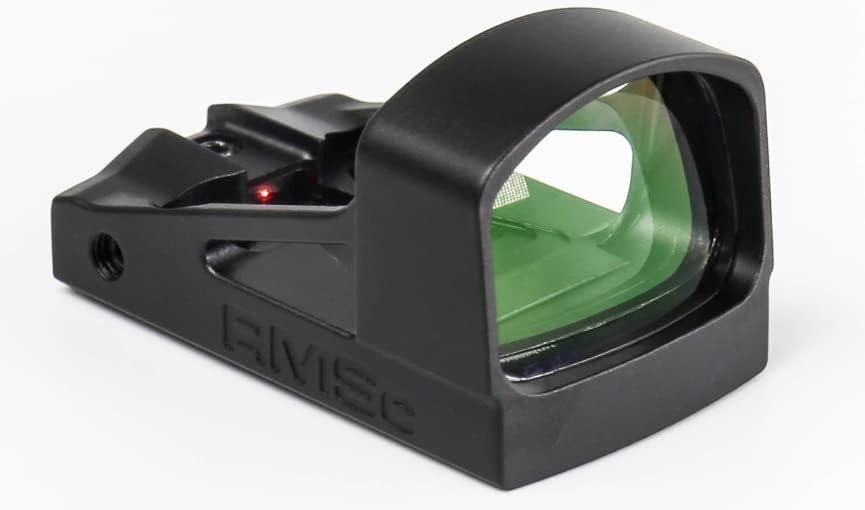
The Shield RMSc was one of the first optics designed specifically for slim carry pistols. Its ultra-low deck height makes it particularly appealing for compact defensive firearms.
Specs
- Footprint: RMSc
- Dot size: 4 MOA
- Battery: CR2032
- Weight: 0.6 oz
- Polymer lens coating
Pros
- Extremely low profile
- Lightweight design
- Minimal slide mass impact
Cons
- Polymer lens less scratch resistant
- Manual brightness limited
My hands-on notes
The RMSc sits extremely low on the slide, which helps maintain a natural sight picture. This is particularly helpful on pistols that weren’t originally designed for optics.
Parallax shift is slightly more noticeable compared with modern enclosed optics, but within typical defensive ranges it’s negligible.
Button ergonomics are minimal since brightness adjustment is automatic. That simplicity can be an advantage for concealed carry setups.
What people say online
Long-time concealed carriers appreciate how the RMSc keeps the pistol slim. Some shooters mention the polymer lens requires careful cleaning to avoid scratches.
Mounting clarity
Because RMSc footprint optics require minimal milling depth, they’re often easier to adapt to older pistol slides.
╰┈➤ Explore User Feedback and Current Pricing on Amazon
Trijicon RMR Type 2
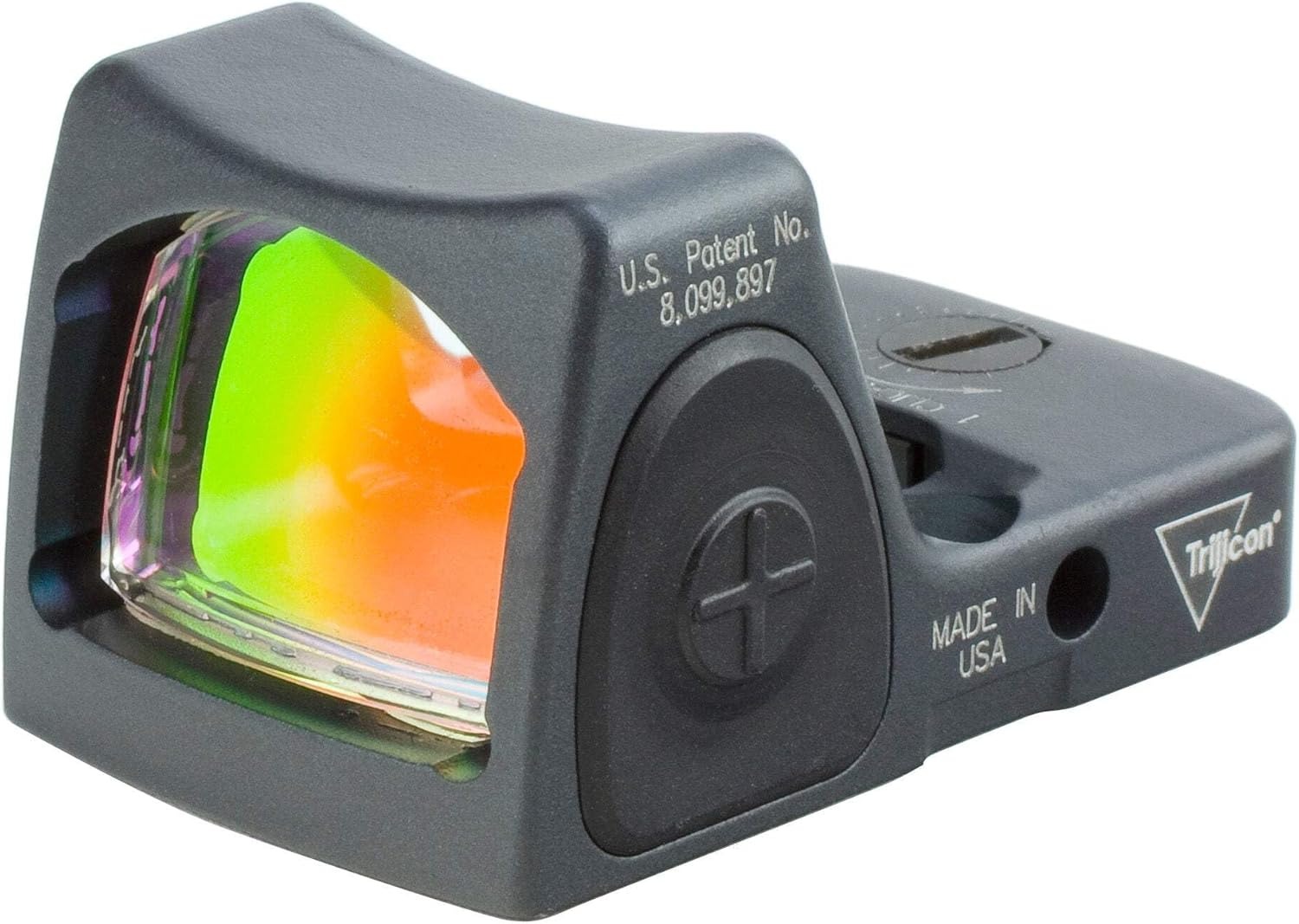
The Trijicon RMR Type 2 remains one of the toughest pistol optics ever built and is widely used by military and law enforcement units.
Specs
- Footprint: RMR
- Dot size: 3.25 MOA
- Battery: CR2032
- Housing: forged aluminum
- Waterproof: 20 meters
Pros
- Exceptional durability
- Crisp dot clarity
- Massive aftermarket support
Cons
- Expensive
- Bottom battery requires removal
My hands-on notes
The RMR’s forged housing handles recoil better than almost any open-emitter optic I’ve tested. It’s extremely resistant to shock from slide cycling.
The lens has a slight blue tint but excellent anti-reflection coatings. Parallax shift is minimal and not noticeable in defensive shooting drills.
Controls are glove-friendly and tactile. Brightness adjustments are positive and easy to feel.
What people say online
Most shooters consider the RMR the gold standard for duty optics. The main complaint is the bottom-mounted battery.
Mounting clarity
Because the RMR footprint is larger, installing it on a PT145 typically requires deeper slide milling or a thicker adapter plate.
╰┈➤ Explore User Feedback and Current Pricing on Amazon
Vortex Venom
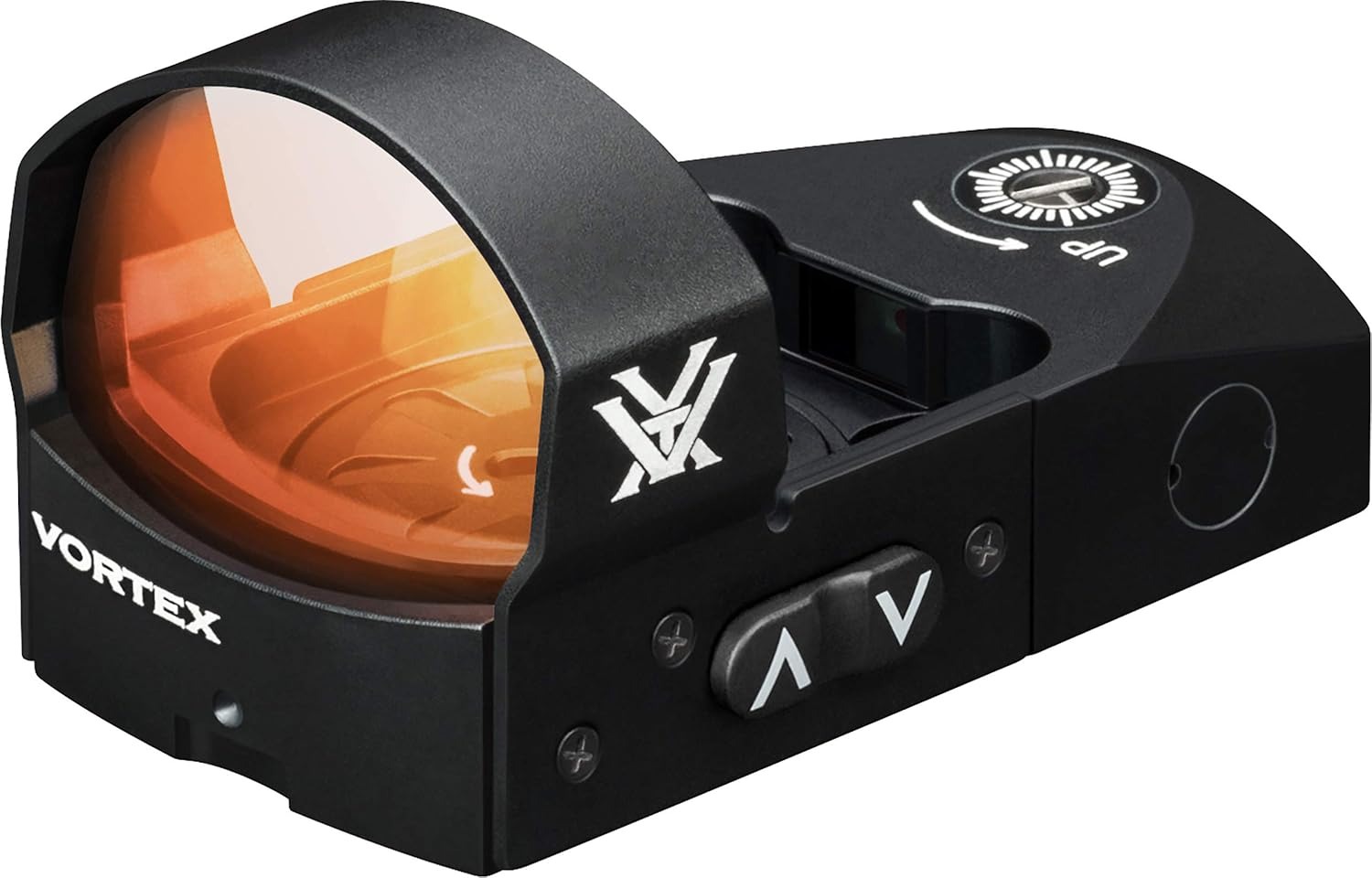
The Vortex Venom is a popular open reflex optic known for its large viewing window and simple controls.
Specs
- Footprint: Docter
- Dot size: 3 MOA or 6 MOA
- Battery: CR1632 top load
- Window: 26 x 16 mm
- Weight: 1.1 oz
Pros
- Large viewing window
- Top battery access
- Excellent warranty
Cons
- Slightly taller deck height
- Open emitter exposure
My hands-on notes
The large window makes the Venom extremely easy to track during recoil. Target transitions feel faster compared with smaller optics.
Parallax behavior is typical for an open emitter reflex sight—noticeable only at extreme angles. The lens tint is mild and doesn’t affect color perception.
Button placement on the rear is glove-friendly, and the battery cap design is straightforward.
What people say online
Many shooters recommend the Venom for budget carry builds thanks to Vortex’s lifetime warranty.
Mounting clarity
Like the FastFire, the Docter footprint works well with universal adapter plates.
╰┈➤ Explore User Feedback and Current Pricing on Amazon
How I Tested / Evaluation Criteria
Parallax
Parallax shift can occur when the shooter’s eye is off-center relative to the optic window. I evaluated each optic by presenting the pistol from different angles and tracking dot movement relative to the target. High-quality optics kept the dot stable within realistic defensive shooting distances.
Co-witness and Deck Height
Deck height determines whether iron sights remain visible through the optic window. Lower-profile optics make co-witness easier and maintain a natural presentation angle.
Durability
Compact pistols like the PT145 produce sharp recoil impulses. I evaluated housing strength, lens coatings, and emitter protection to determine how well each optic withstands repeated slide cycling.
Battery Performance
Battery life is critical for defensive carry. I prioritized optics with long runtimes and convenient battery access.
Brightness Range
A good carry optic needs both daylight brightness and usable low-light settings. I tested visibility outdoors in bright sun and indoors under dim lighting.
Glass Quality
Clarity, tint, and edge distortion all influence how quickly the shooter can acquire targets. Optics with minimal distortion and crisp dots scored higher.
Controls Ergonomics
Buttons must remain easy to operate under stress and with gloves. I tested tactile feedback and button placement across all optics.
Mounting Ecosystem
Because the Taurus PT145 lacks factory optics support, adapter plates and slide milling options matter significantly.
How to Choose the Right Red Dot for This Gun
Selecting an optic for a Taurus PT145 requires more planning than modern optics-ready pistols. The first consideration is mounting compatibility. Because the PT145 does not include a factory optics cut, you will either need a slide milling service or a mounting plate that replaces the rear sight. Each option affects deck height and co-witness potential.
Footprint compatibility is the next major factor. Smaller footprints such as RMSc typically require less slide material removal and allow a lower mounting position. Larger footprints like RMR may offer greater durability but require deeper cuts or thicker plates.
Window size also plays a big role in usability. Larger windows make it easier to locate the dot during fast draws, but they often increase optic weight and height. On compact pistols, smaller optics sometimes balance better with the slide mass.
Durability matters more than many shooters realize. Compact .45 pistols generate abrupt recoil impulses that can stress internal electronics. Choosing an optic with a proven recoil rating helps prevent failures or zero drift.
Battery access is another practical consideration. Optics with side or top battery compartments simplify maintenance because you don’t need to remove the sight to replace the battery.
Finally, consider dot size. Larger dots such as 6 MOA are often faster to acquire in defensive situations, while smaller dots allow more precise aiming at distance.
Balancing these factors will help you choose a red dot that works reliably with the PT145 platform.
FAQs
Can the Taurus PT145 be optics ready?
The PT145 was produced before optics-ready slides became common, so installing a red dot usually requires either a mounting plate or slide milling.
What footprint works best for this pistol?
RMSc and Docter footprints tend to be easier to adapt because they require less slide depth.
Is a 6 MOA dot better for concealed carry?
Many shooters prefer 6 MOA dots for defensive pistols because they are easier to acquire quickly.
Do I need suppressor-height sights?
If you want co-witness capability, suppressor-height irons are usually necessary.
Are enclosed emitter optics necessary?
For most concealed carry pistols, open emitter optics are sufficient, though enclosed designs provide better debris protection.
Conclusion
Finding the Best Red Dot for Taurus Pt145 ultimately comes down to balancing durability, mounting compatibility, and usability. Because the PT145 was never designed for optics, choosing a compact sight with a flexible footprint and manageable deck height is critical.
Among the options reviewed here, the Trijicon RMR Type 2 stands out for unmatched durability, while the Holosun 507K offers one of the best combinations of features, battery life, and size for compact carry pistols. With the right mounting solution and a reliable optic, the Taurus PT145 can absolutely benefit from modern red-dot performance.